1. Standard Tamil Keyboard Layout
High resolution image suitable for printing.
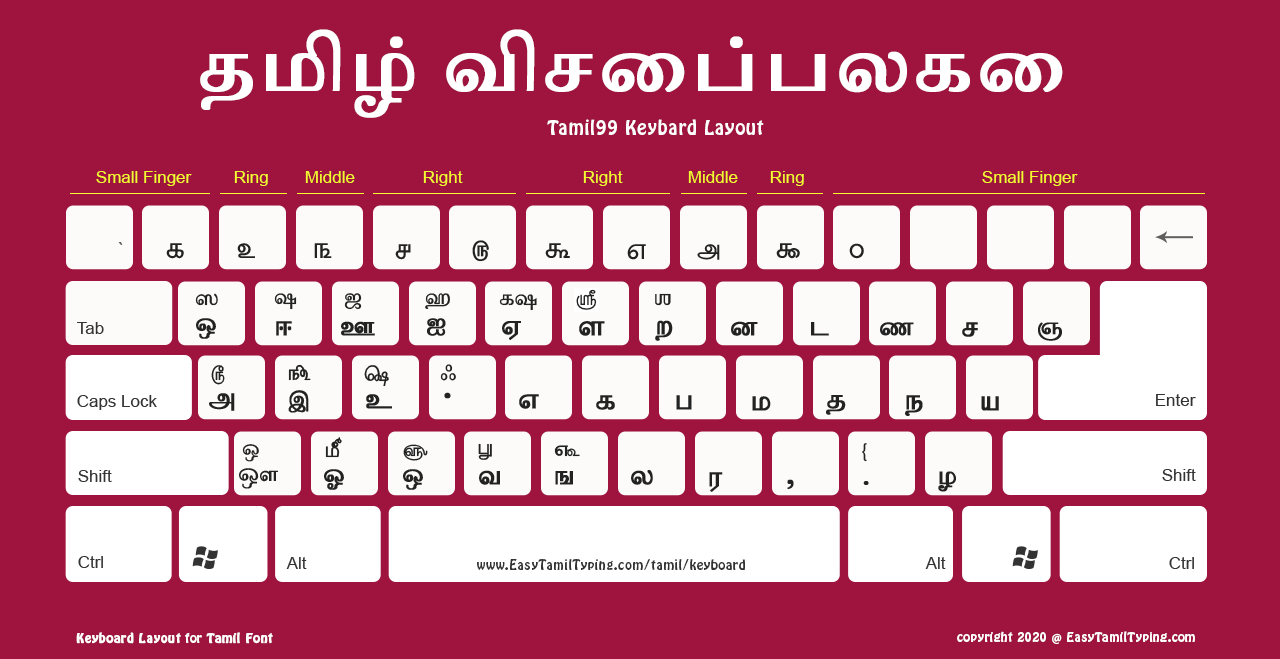
We have five different Tamil keyboard layouts for you to download on your computer. Once downloaded — you can use it as a reference to type in Tamil either on Word document or any other text editor. You also need to download the matching Tamil fonts.
High resolution image suitable for printing.
High resolution image suitable for printing.
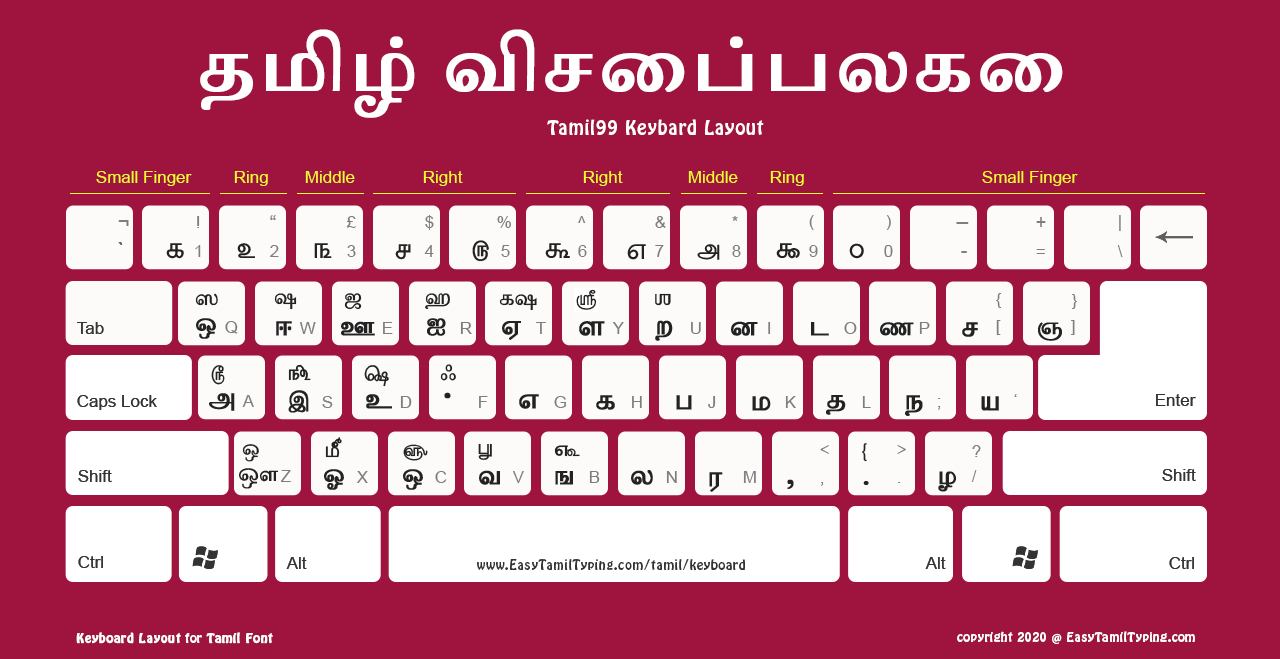
High resolution image suitable for printing.
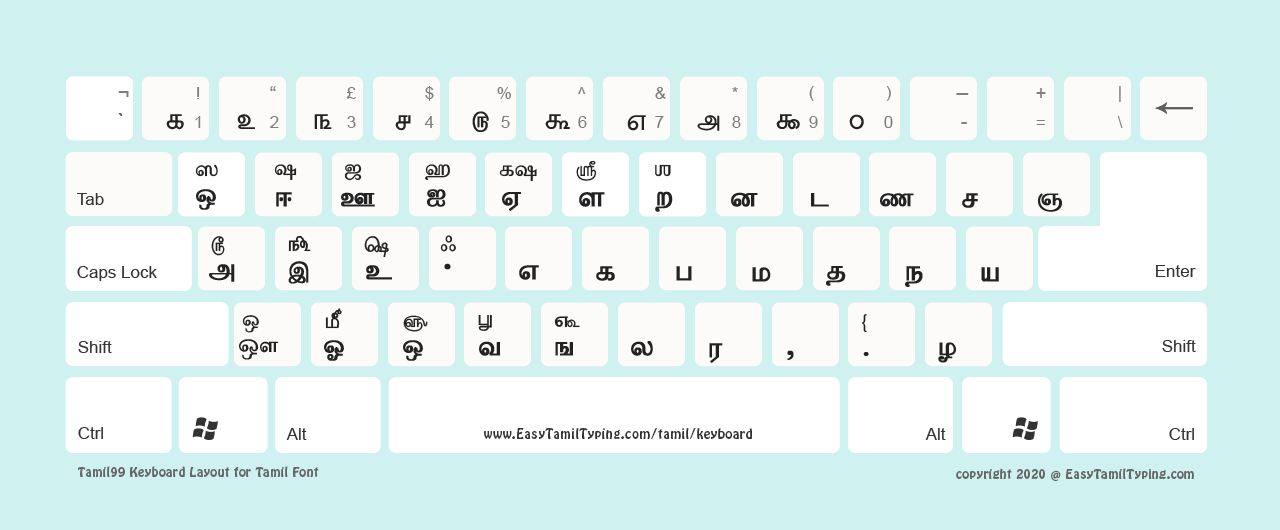
High resolution image suitable for printing.
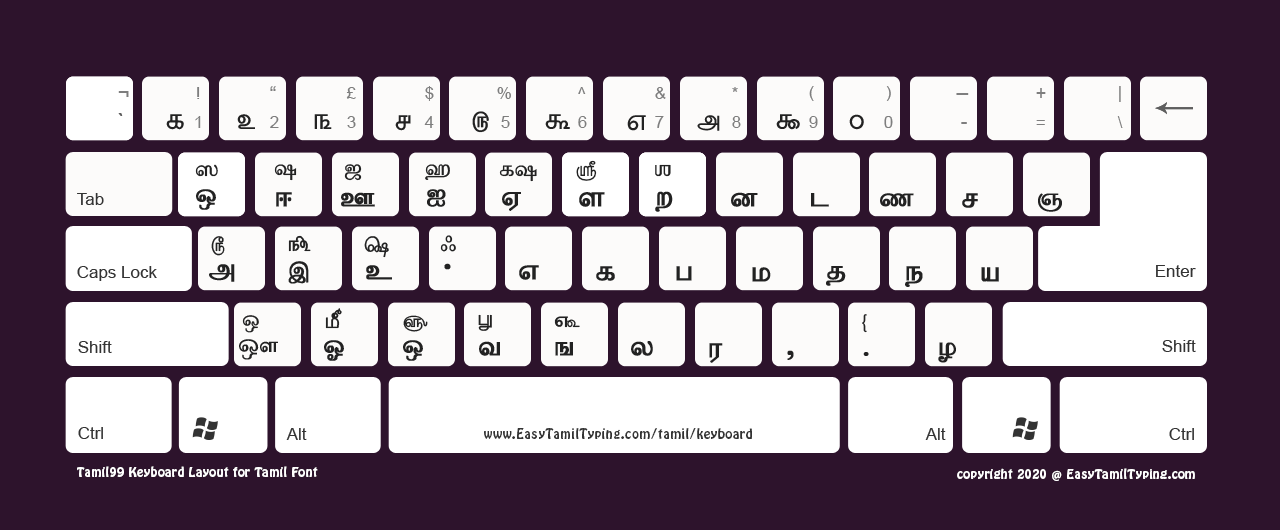
High resolution image suitable for printing.
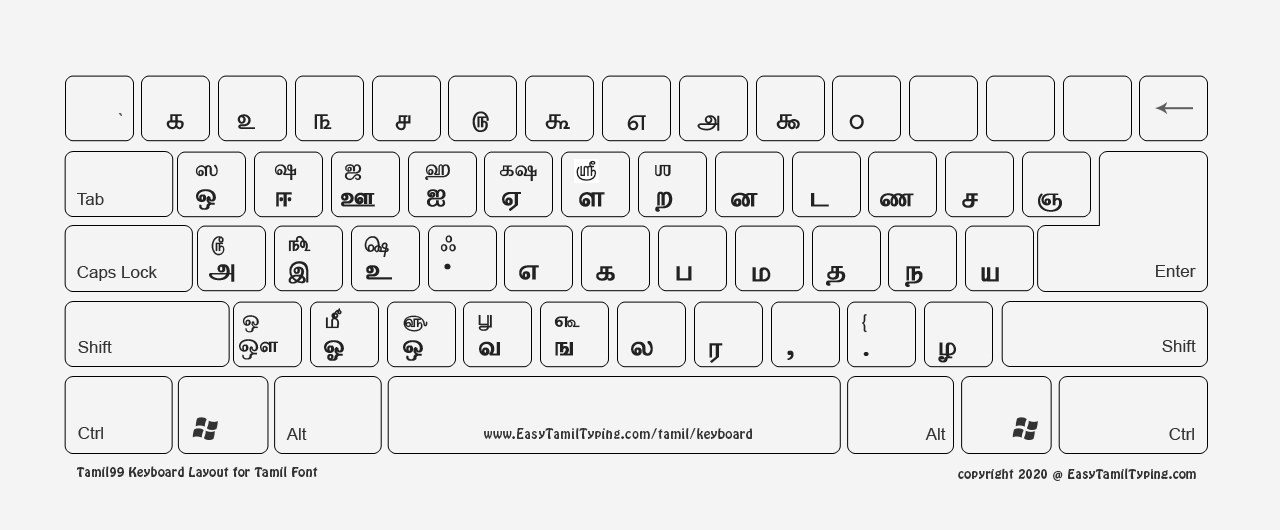
Here's our systematic approach to setting up Tamil typing.
Acquire your Tamil font — browse our curated fonts library and install the ideal typeface for your Tamil writing needs.
Obtain your keyboard reference using this reliable download process:
Click on your preferred keyboard layout from our collection
Right-click when the high-resolution image appears
Choose "Save image as..." and save to your preferred location
Establish your typing environment by opening any word processor and selecting the Tamil font you installed earlier.
Launch your Tamil writing session! Position your keyboard image for easy viewing while you compose beautiful Tamil text.
Expert recommendation: Limited screen space? Our keyboards deliver outstanding print clarity — print one for a reliable desktop reference that's always ready when you need it!
Designed for Tamil99 keyboard layout — accurately mapped to provide an authentic Tamil typing experience with correct character placement.
Meets professional standards — designed for typists, and businesses requiring error-free Tamil documentation.
Supports various display formats — perfect for presentations, reference guides, digital displays, and high-quality printing.
Offers unrestricted licensing — use freely for academic research, commercial projects, educational materials, or personal correspondence.
Popular Entertainment Studios and Productions The global entertainment landscape is currently shaped by a "Big Five" group of legacy studios and a rapidly expanding cohort of streaming giants that are redefining content production and distribution. Leading Studios and Market Concentration As of 2024–2025, the "Big Five" Hollywood studios—Disney, Warner Bros., Universal, Sony, and Paramount—collectively hold a dominant market share of approximately 68% in the U.S. and Canada.
The Architects of Wonder: A Deep Dive into Popular Entertainment Studios and Productions In the modern cultural landscape, entertainment is no longer just a pastime; it is the very fabric of our shared global consciousness. From the silver screen’s golden age to the streaming wars currently raging on our tablets and phones, the way stories are told and consumed has undergone a radical transformation. At the heart of this evolution stand the titans of the industry—the entertainment studios and production houses that serve as the architects of our dreams. This article explores the dynamic ecosystem of popular entertainment studios and productions, examining the history, the current heavyweights, the shift in production methodologies, and the future of storytelling. The Foundations: From Backlots to Conglomerates To understand the current state of popular entertainment studios, one must look back at the studio system of the mid-20th century. During Hollywood’s Golden Age, studios like MGM, Warner Bros., and Paramount didn't just produce movies; they owned the theaters that showed them and held contracts with the stars who appeared in them. This vertical integration created a factory-like efficiency that churning out hundreds of films a year. While the "studio system" legally dissolved in the late 1940s due to antitrust laws, the concept of the studio as a brand remained. Today, however, the landscape is defined by massive media conglomerates. The modern studio is often a subsidiary of a larger corporate entity, possessing vast libraries of intellectual property (IP). The "Big Five" and the Streaming Revolution In the contemporary era, the definition of a "studio" has blurred. The traditional "Big Five" majors—Disney, Warner Bros., Universal, Paramount, and Sony—now compete not just for box office dollars, but for subscriber numbers. The rise of streaming platforms has turned tech companies into the newest, most formidable studios on the block. 1. The Walt Disney Studios: Disney is arguably the most powerful entertainment entity in history. Their acquisition strategy has been masterful. By absorbing Pixar, Marvel, and Lucasfilm, Disney consolidated popular culture under one roof. Their production strategy relies heavily on franchise management—interconnected universes that guarantee audience retention across films, merchandise, and theme parks. The "Marvel Cinematic Universe" (MCU) remains the gold standard of modern production logistics, a feat of long-form storytelling planned years in advance. 2. Warner Bros. Pictures: Home to the Harry Potter franchise and the DC Universe, Warner Bros. balances legacy with innovation. Their recent merger with Discovery highlighted the volatility of the current market, pushing them to streamline productions and focus on "tentpole" releases—massive budget films designed to support the financial weight of the studio. 3. Universal Pictures: Universal distinguishes itself through diversity. While they boast massive franchises like Fast & Furious and Jurassic World , their production arm is also renowned for lower-budget, high-return horror films (through Blumhouse Productions). This portfolio approach allows them to mitigate the risks of blockbuster filmmaking. 4. The New Guard: Netflix and Amazon Studios: The disruptors have become the establishment. Netflix Studios has revolutionized production by removing the physical constraints of release windows. Their model prioritizes volume and data-driven content creation. Amazon Studios, bolstered by the acquisition of MGM, brings a similar tech-first approach, leveraging user data to greenlight productions that specific demographics are guaranteed to watch. The Anatomy of a Production While the studios provide the financing and distribution, the actual "production" is where the magic happens. A popular misconception is that studios make movies; often, it is independent production companies partnered with studios that handle the creative heavy lifting. The Auteur Production Houses In contrast to the corporate franchise model, some of the most respected content comes from auteur-driven production companies.
A24: In just over a decade, A24 has become a brand synonymous with prestige and artistic integrity. Productions like Everything Everywhere All At Once and The Whale demonstrate that audiences crave original, complex storytelling. A24’s model proves that a studio brand can be built on "cool" and quality rather than just explosions and superheroes. Bad Robot (J.J. Abrams): This production company exemplifies the mystery-box style of filmmaking, creating high-concept mysteries that dominate pop culture discourse. Plan B (Brad Pitt): Consistently shepherding award-winning films like 12 Years a Slave and Moonlight , Plan B shows how actor-led production companies can elevate serious dramatic works.
The Production Lifecycle The journey of a popular production involves three distinct phases, each managed with military precision: Deep Dicking Duo Brazzers
Pre-Production: This is where the vision is codified. In the modern era, this phase involves extensive "visualization." For a VFX-heavy studio production, scenes are often fully animated in a rough format (pre-visualization) before a single camera rolls. This ensures that the hundreds of millions of dollars allocated are spent efficiently. Production (Principal Photography): The chaotic, kinetic phase of filming. Modern productions are increasingly global, chasing tax incentives in locations like Georgia, the UK, and Australia. The studio oversees logistics, ensuring that a production shooting in Budapest can seamlessly integrate with visual effects teams in London and Los Angeles. Post-Production: In the digital age, this is often where the movie is truly "made." Visual effects (VFX) studios like Industrial Light & Magic (ILM) and Weta FX are the unsung heroes of popular entertainment. As superhero and sci-fi genres dominate, post-production timelines have
Exploring Popular Entertainment Studios and Productions The landscape of "popular entertainment studios and productions" defines global culture, fueling our screens with blockbuster films and binge-worthy series. Dominated by legacy titans and innovative newcomers, the industry is currently valued at over $120 billion . The "Big Five" Legacy Studios Historically, Hollywood has been anchored by the "Big Five" majors. These powerhouses maintain massive distribution infrastructures that make global theatrical releases possible.
1. Major Legacy Film Studios (Hollywood "Big Five") These studios dominate global box office and traditional cinematic releases. The Architects of Wonder: A Deep Dive into
Warner Bros. Discovery
Franchises: Harry Potter, DC Comics (Batman, Superman), The Matrix, Lord of the Rings. Recent Hits: Barbie, Dune, Wonka .
The Walt Disney Studios
Includes: Marvel Studios, Lucasfilm (Star Wars), Pixar, 20th Century Studios. Productions: Avengers, Frozen, The Lion King, Avatar, Indiana Jones.
Universal Pictures (Comcast/NBCUniversal)
 Sambhu Raj Singh ·