In RE6 , you dodge-rolled. In RE7 , you raise your arms. Blocking reduces damage but doesn't negate it. It forces you to stand your ground rather than run. It is a defensive, desperate move.
This is the innovation. You find VHS tapes that let you play as a previous victim (like the VHS star, Clancy). These segments act as tutorials, lore dumps, and "save scumming" mechanics. If you find a tape showing a secret door, you can then exploit that knowledge in the present. It is a brilliant diegetic way to provide hints without breaking immersion. biohazard resident evil 7
Released in 2017, Resident Evil 7: Biohazard marked a seismic shift for Capcom’s legendary franchise. After the action-heavy "global-scale" approach of its immediate predecessors, Resident Evil 7 (RE7) stripped the series back to its intimate, claustrophobic roots. By adopting a visceral first-person perspective and a gritty, Southern Gothic aesthetic, it redefined what survival horror could look like in the modern era. In RE6 , you dodge-rolled
When the marketing campaign for Resident Evil 7 began, it was cryptic. The tagline, "Fear comes home," was not just a slogan; it was a design philosophy. Capcom recognized that the fear found in the original 1996 game stemmed from a sense of helplessness and confinement—elements that were largely absent in the later entries where players wielded rocket launchers and suplexed zombies. It forces you to stand your ground rather than run
forces you to slow down. Ammo is scarce. Healing items are limited. Every door creaks with malice. This is the "metroidvania" style of level design that made the 1996 original famous: the main house is a puzzle box where you find a specific key (or item) to unlock a specific wing, only to be sent back to a safe room to catch your breath.
Add Sense for Chrome works in both the build-in Sense client and in mashups using the Capabilities APIs
Charts displayed with the API through getObject and visualization.show will be tagged.
Used app(s) will be displayed in the bottom right corner.
Properties and other buttons will work just as in the client.
If your mashup shows charts from more than one app, all will be listed.
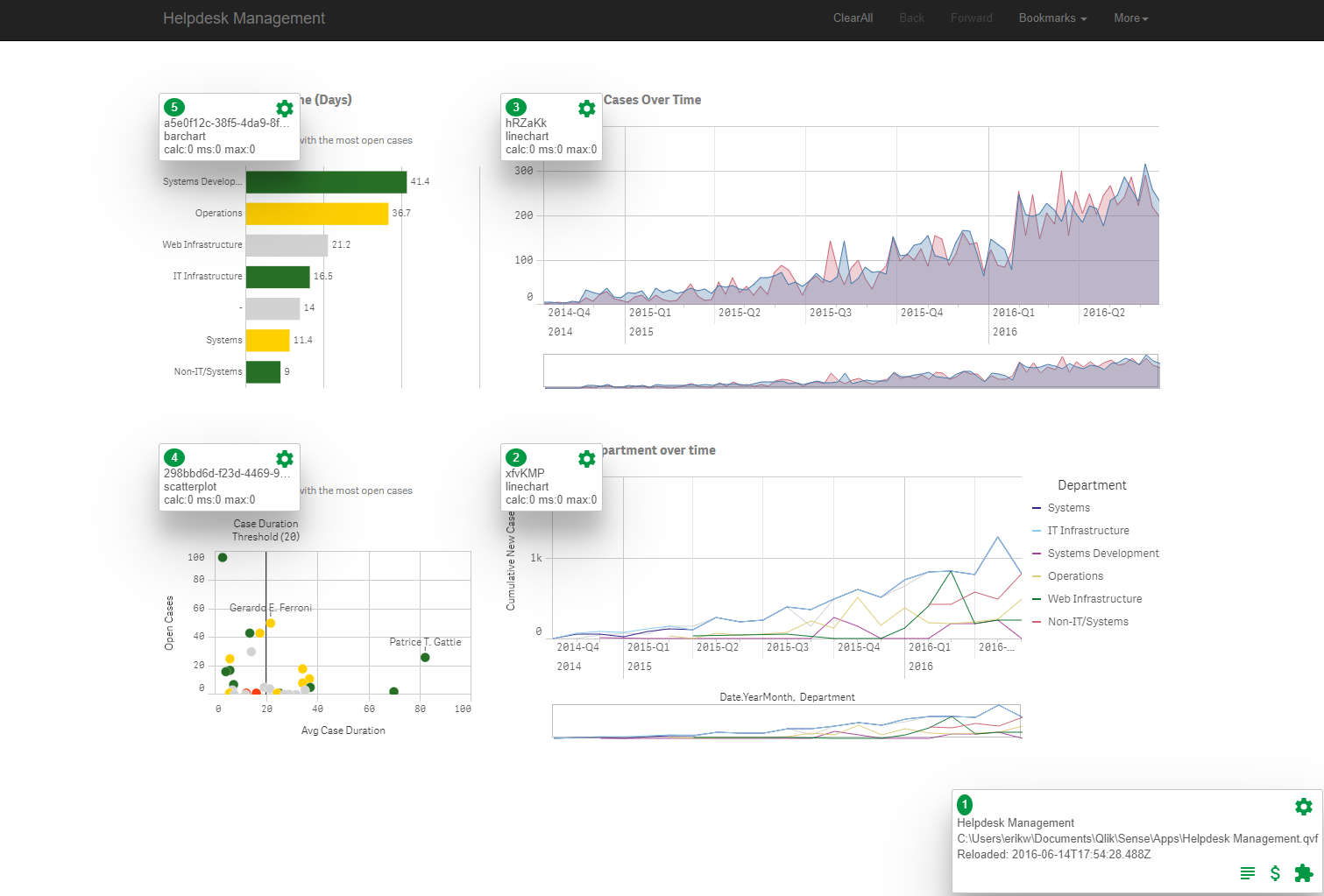
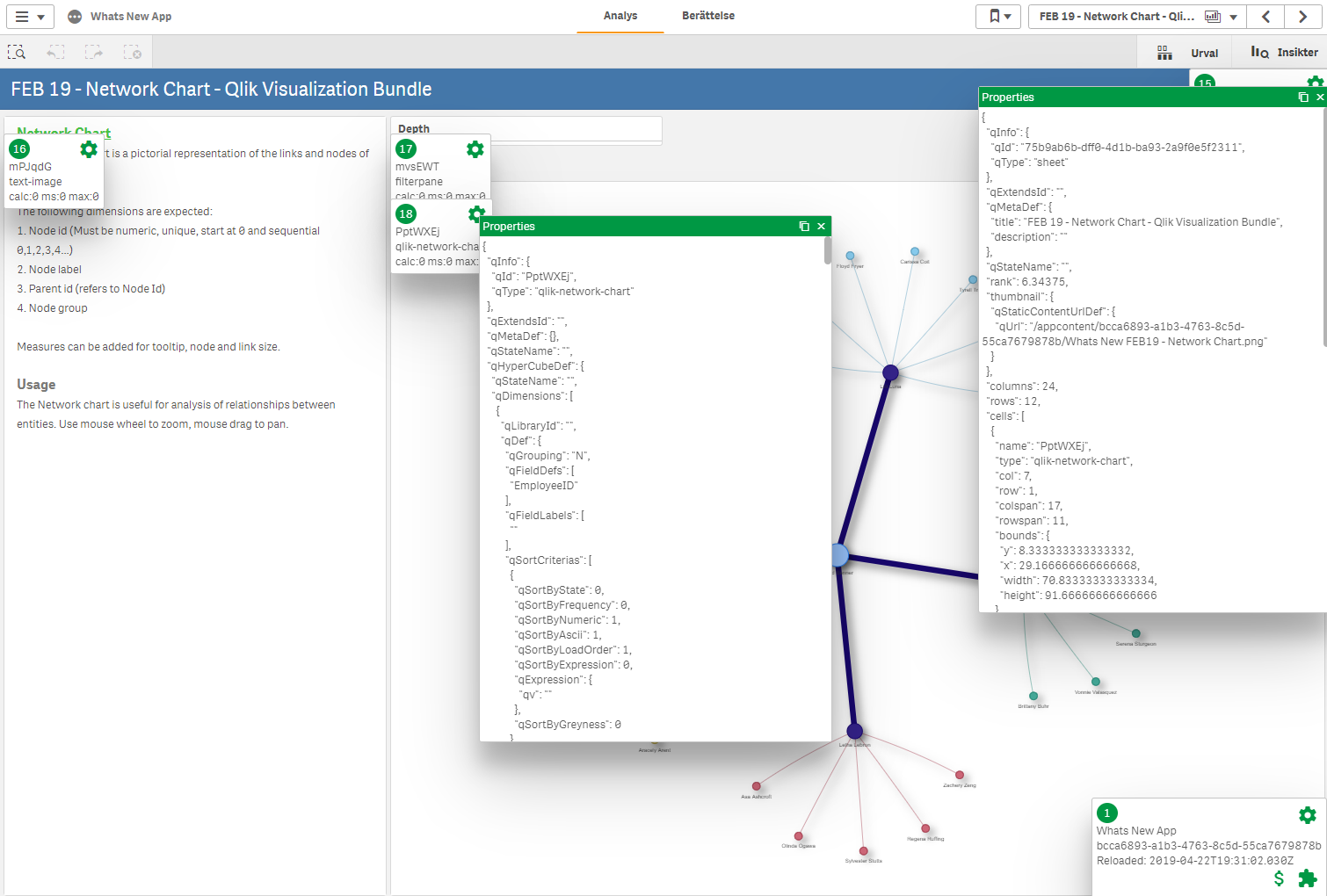
For all charts, sheets and the app you can click on the cogwheel.
That will display the properties for the object.
Use this to troubleshoot or to investigate what settings produce this chart.
You can display several objects properties at the same time, to make comparisons.
Properties can also be copied to clipboard.
From the app box you can inspect the script, variables and app properties.
Windows can be open at the same time and moved.
You can also copy window contents, complete or partly, to the clipboard.
If you do not have access to the script the script button will not be available.
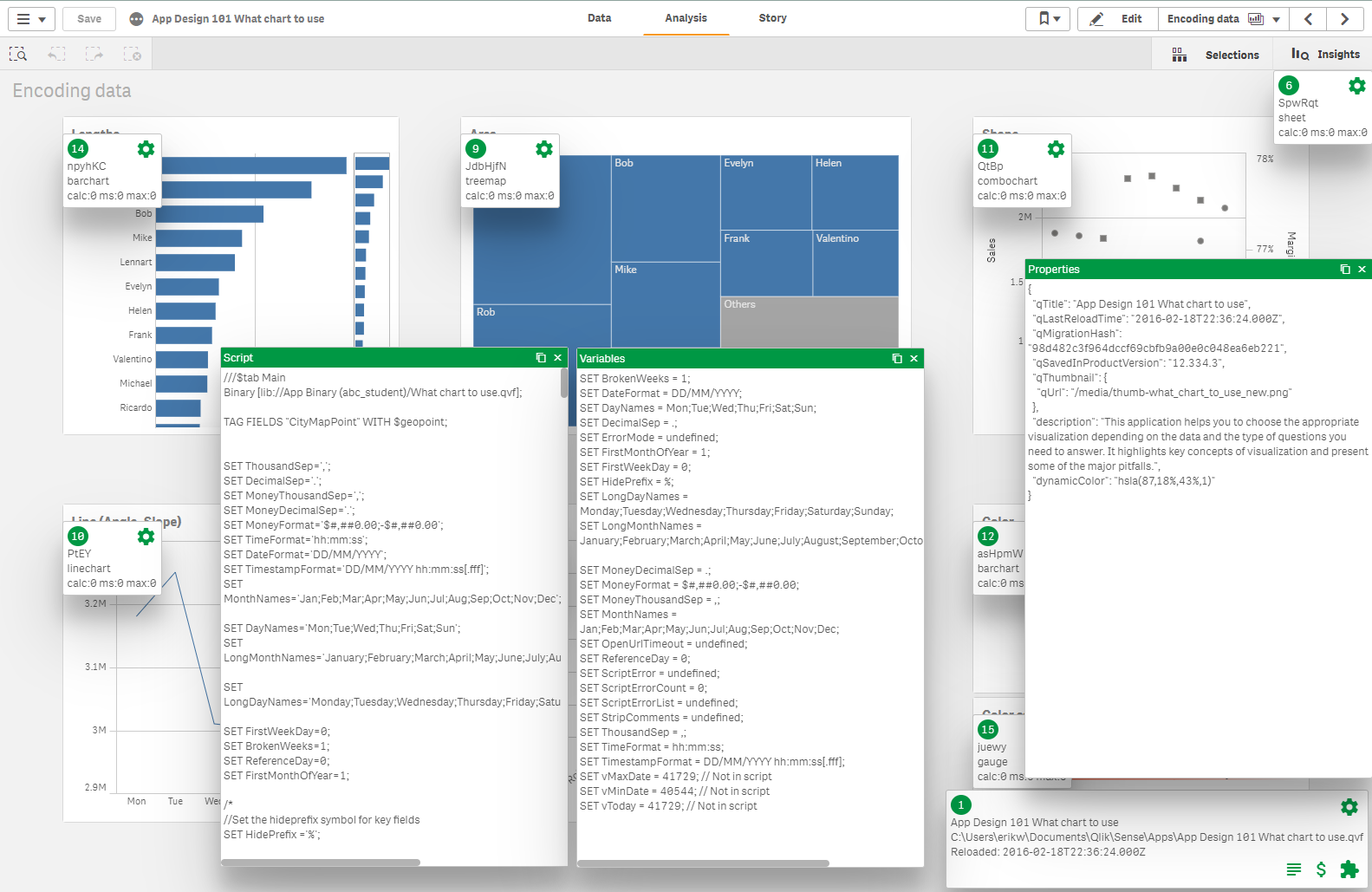
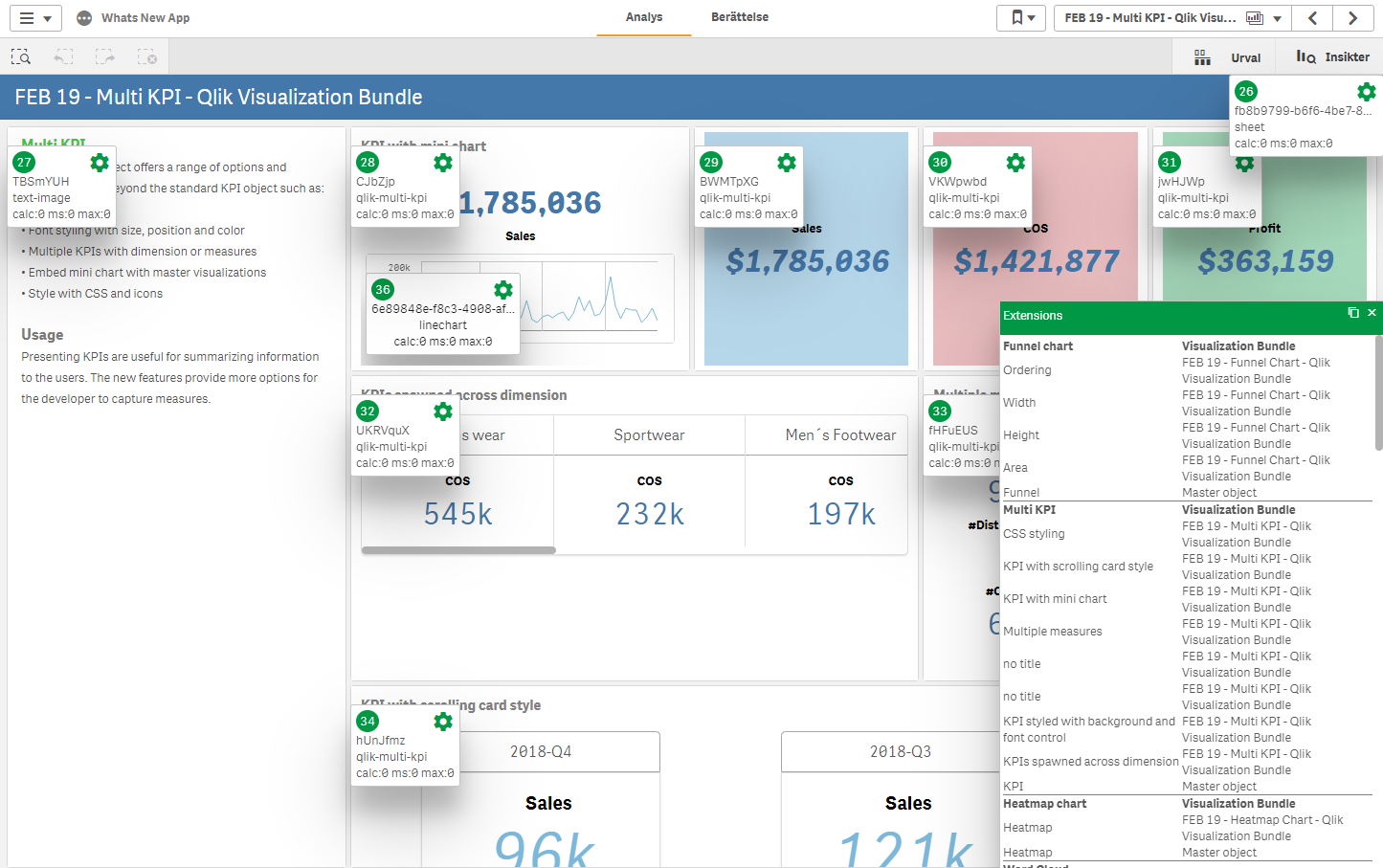
You can also easily see what extensions and charts are used in your app.
Just click on the extensions button in the app info box.
You will get a list of all axtensions and built-in charts are used in your extension, with title and sheet title
Master objects are also included.
The extension can also help you find performance problems.
When you enable the extension on a page, whether it's the standard client or a mashup, it will start recording recalculation times.
Every time an object is revalidated then extension will register time elapsed for recalculation.
It will also count how many revalidations has occured.
If the object is no longer on the screen, the extension will continue to monitor recalculations, so when you re-enable it you will get all the statistics.