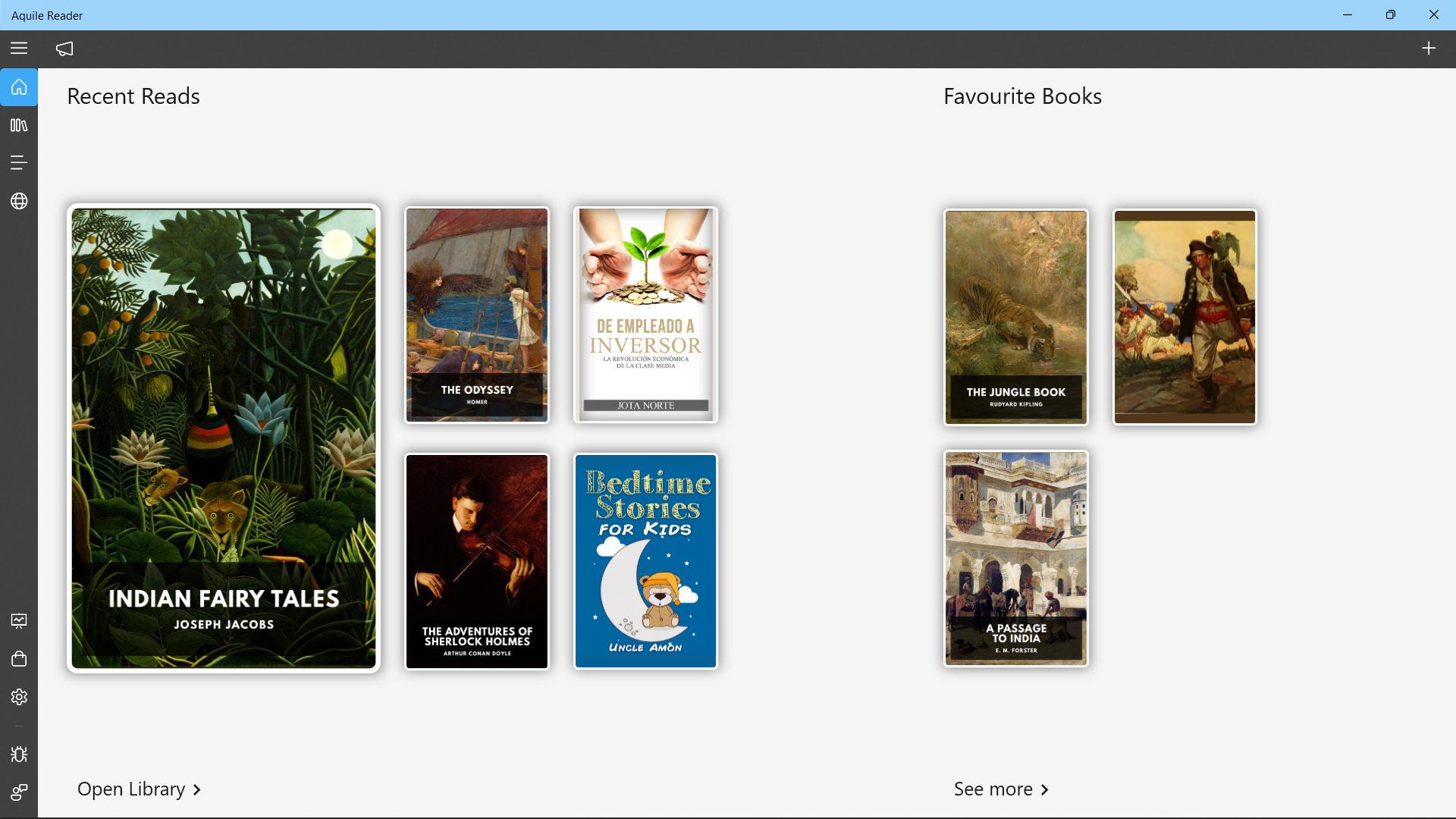
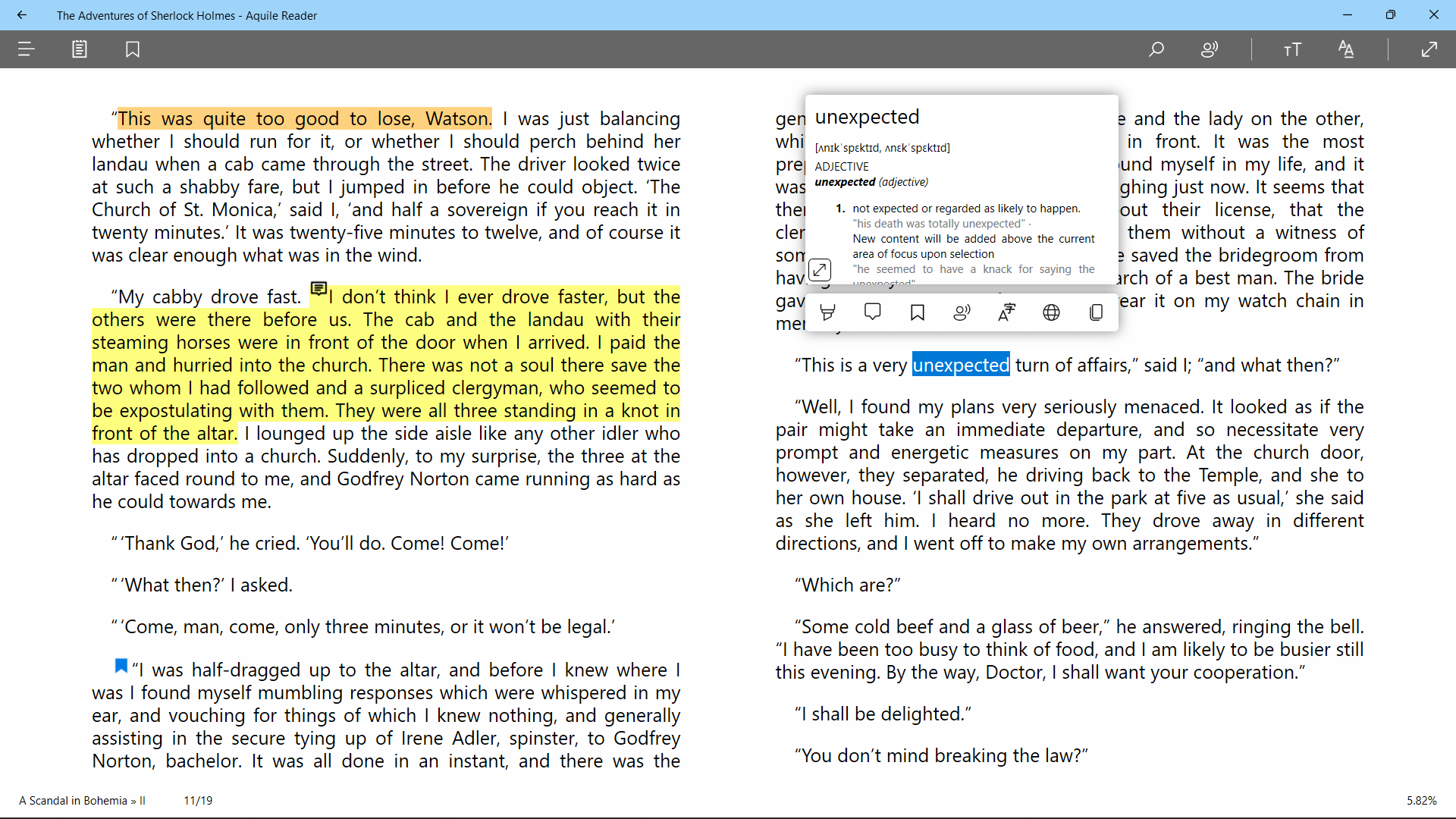
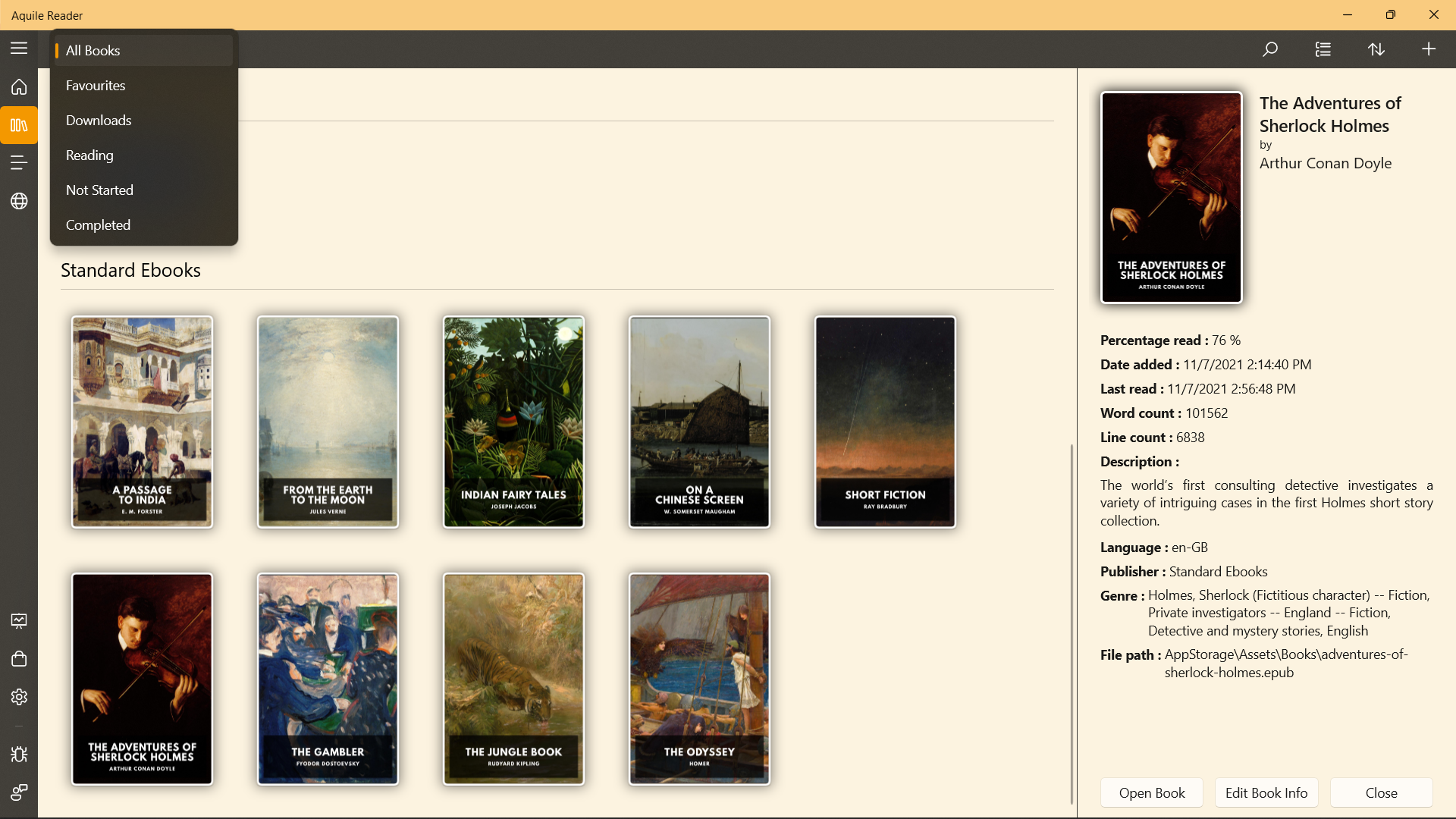
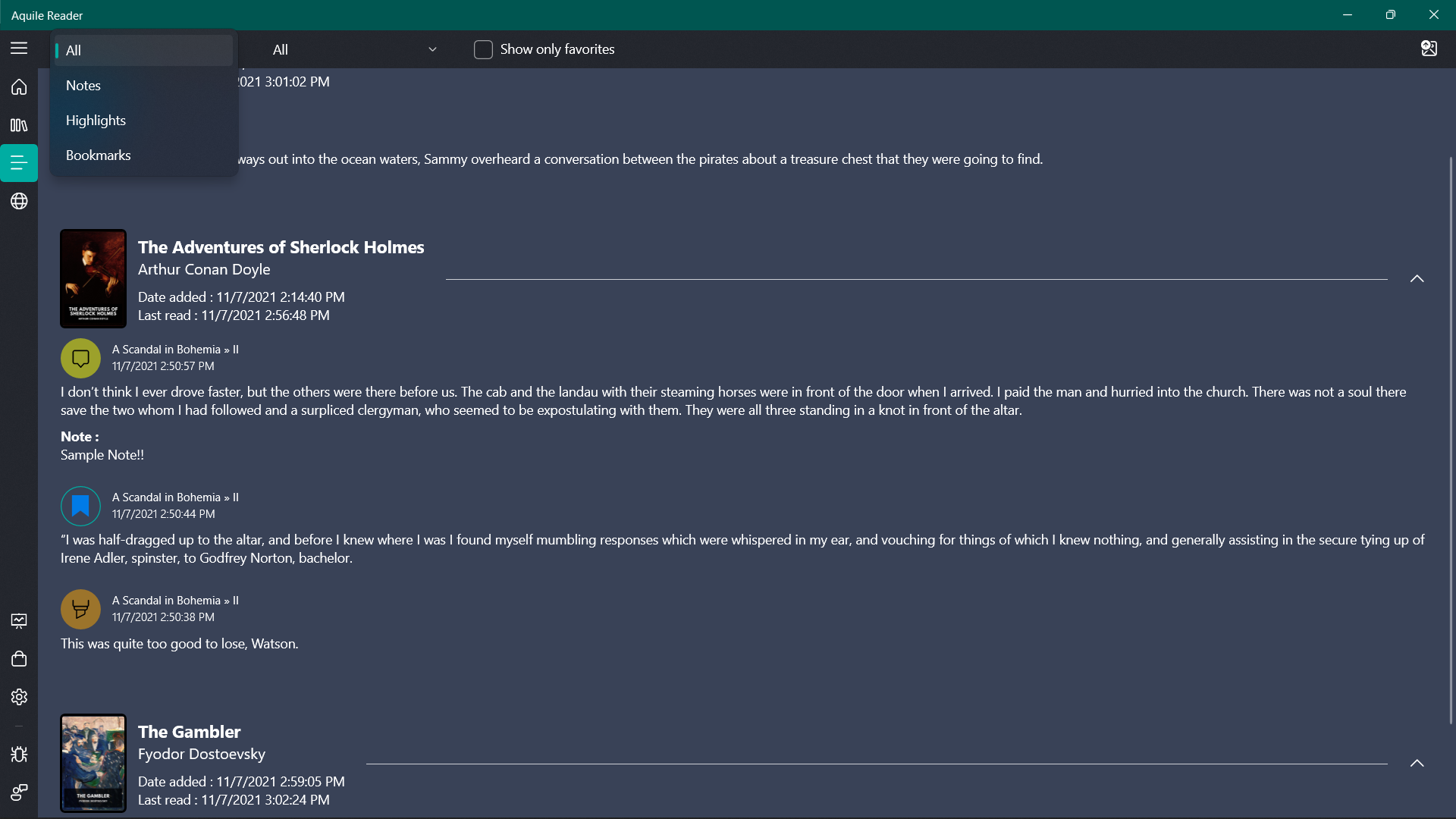
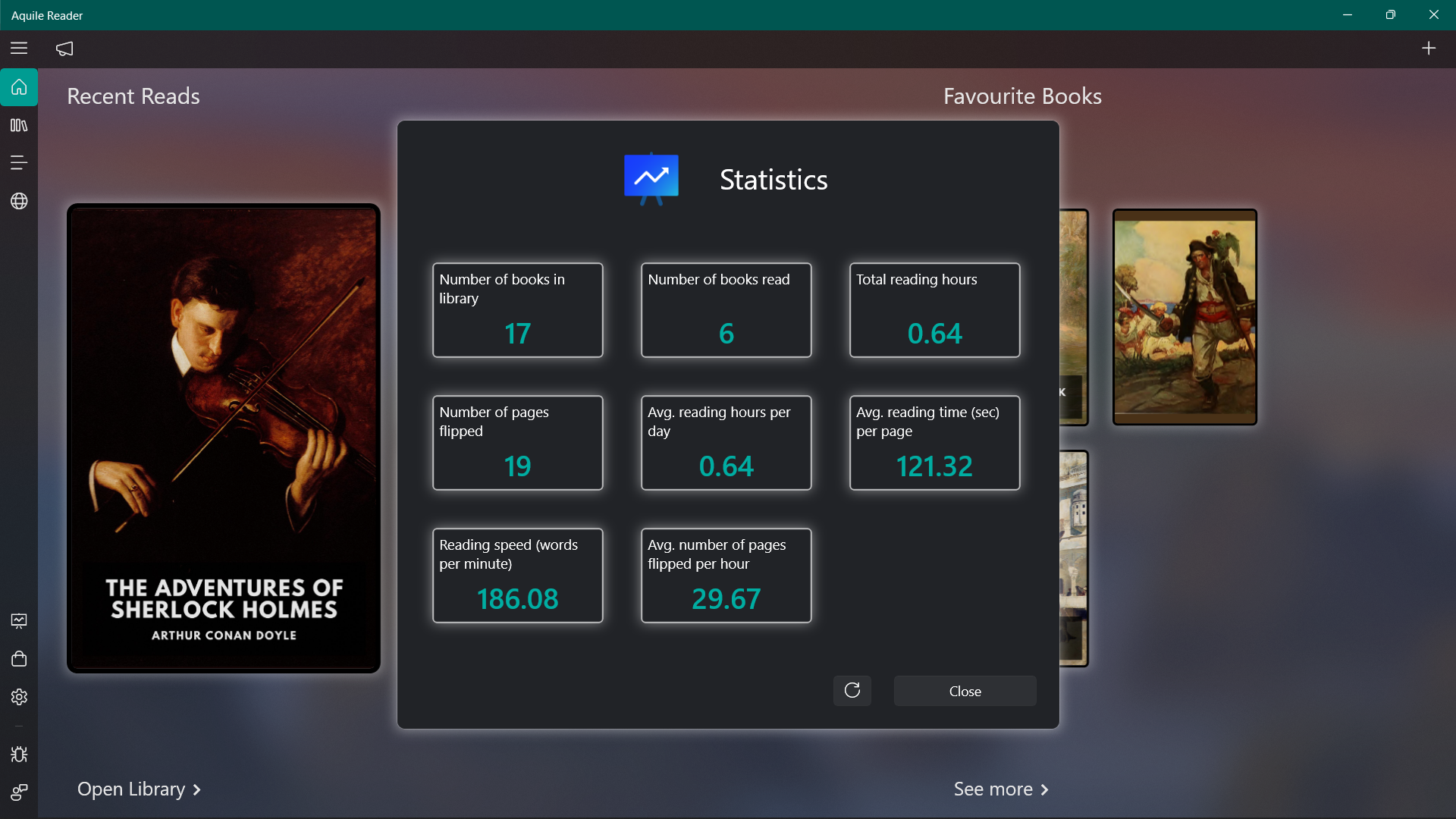
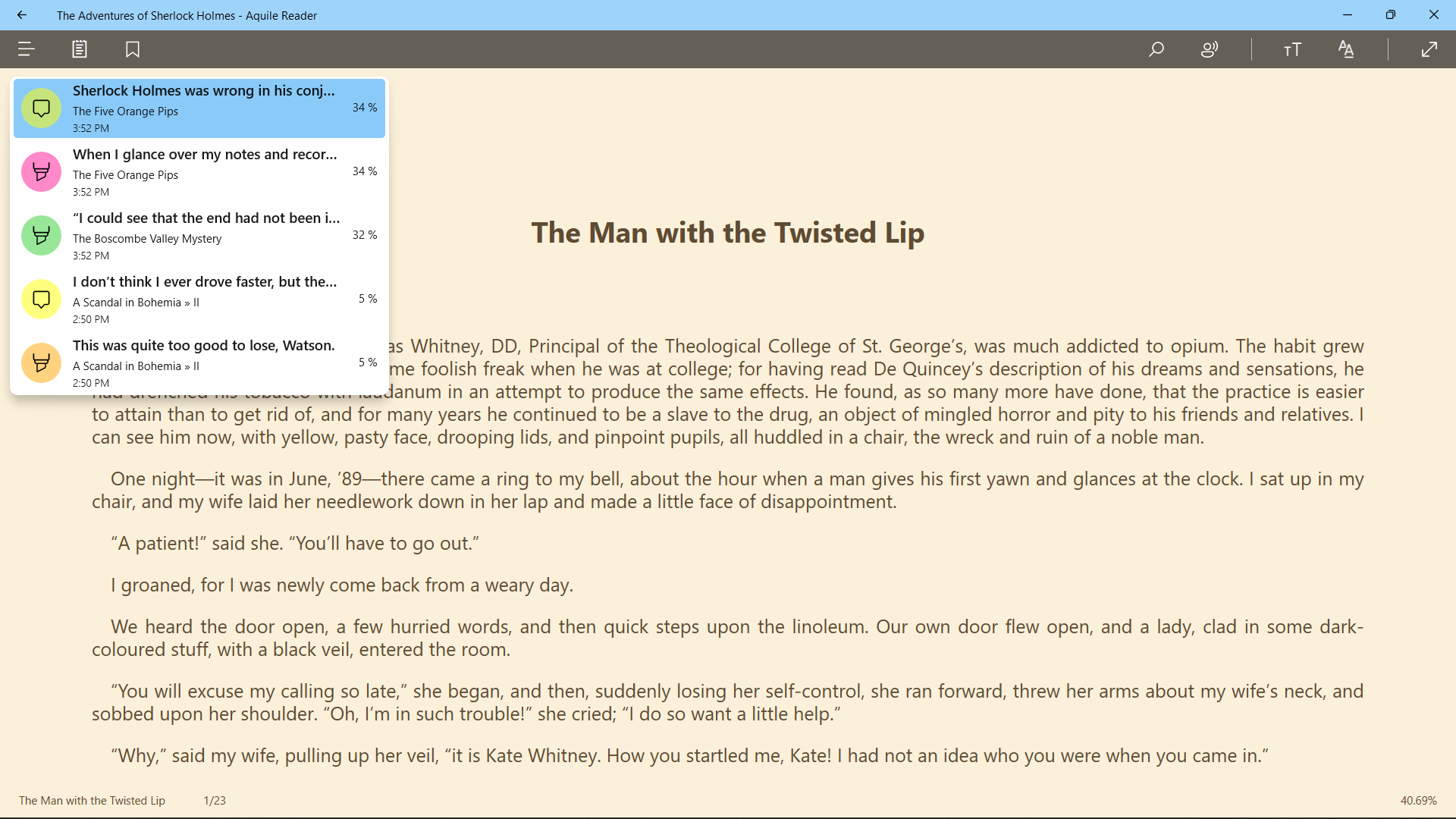
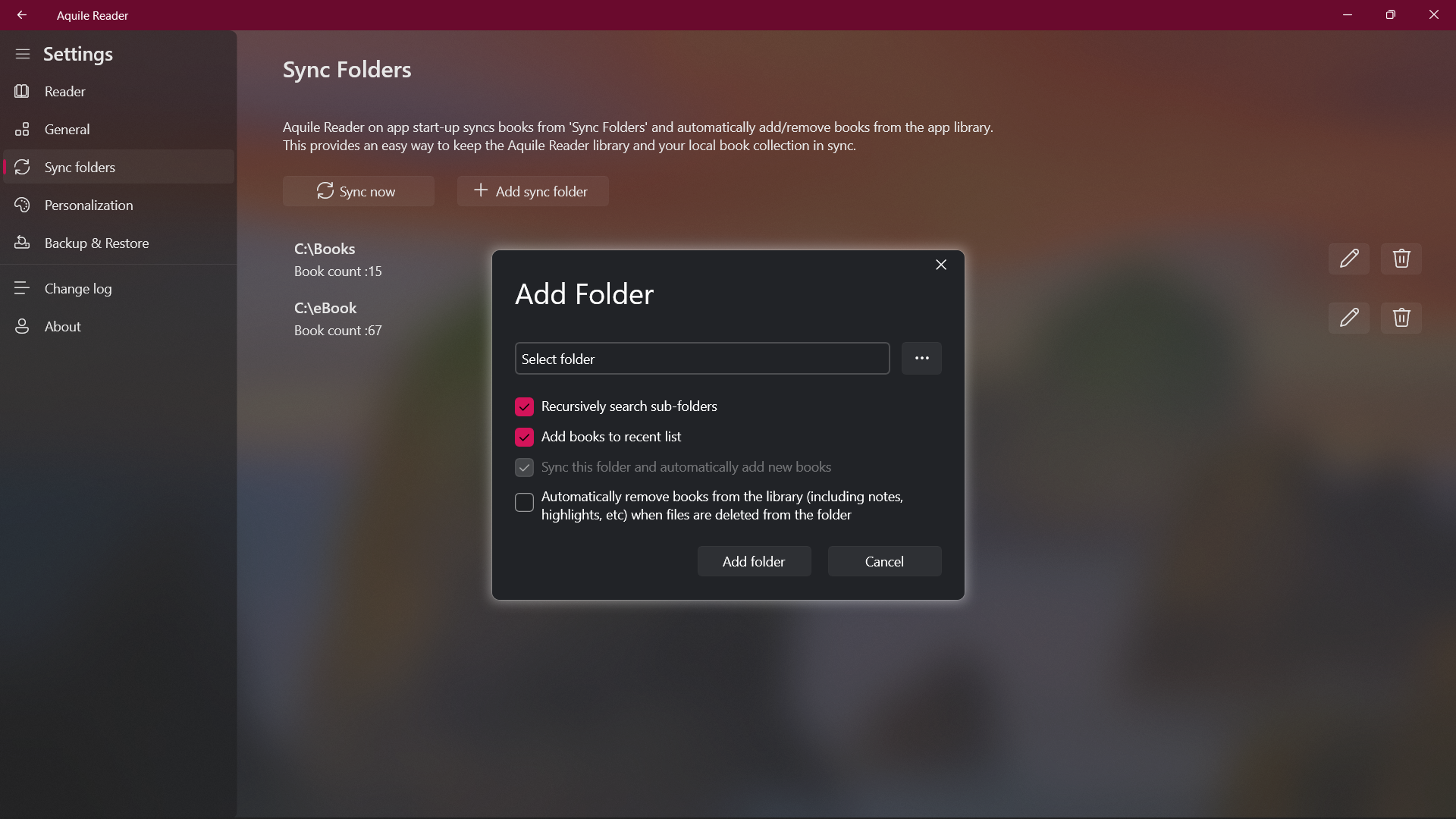
Dive into an immersive and modern reading experience, wherever you are. Aquile Reader connects your books across Windows and Android.

Dive into an immersive and modern reading experience, wherever you are. Aquile Reader connects your books across Windows and Android.
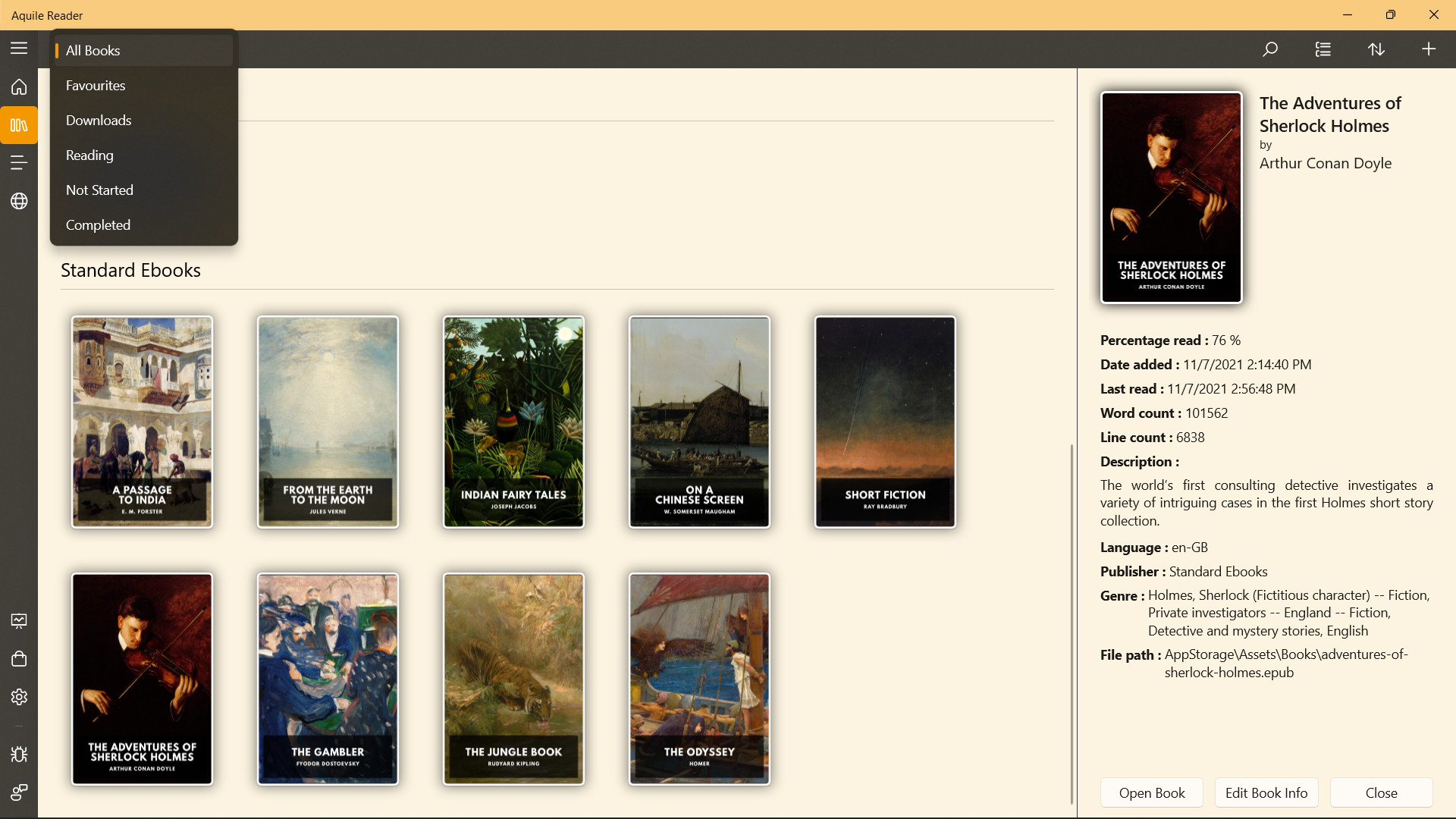
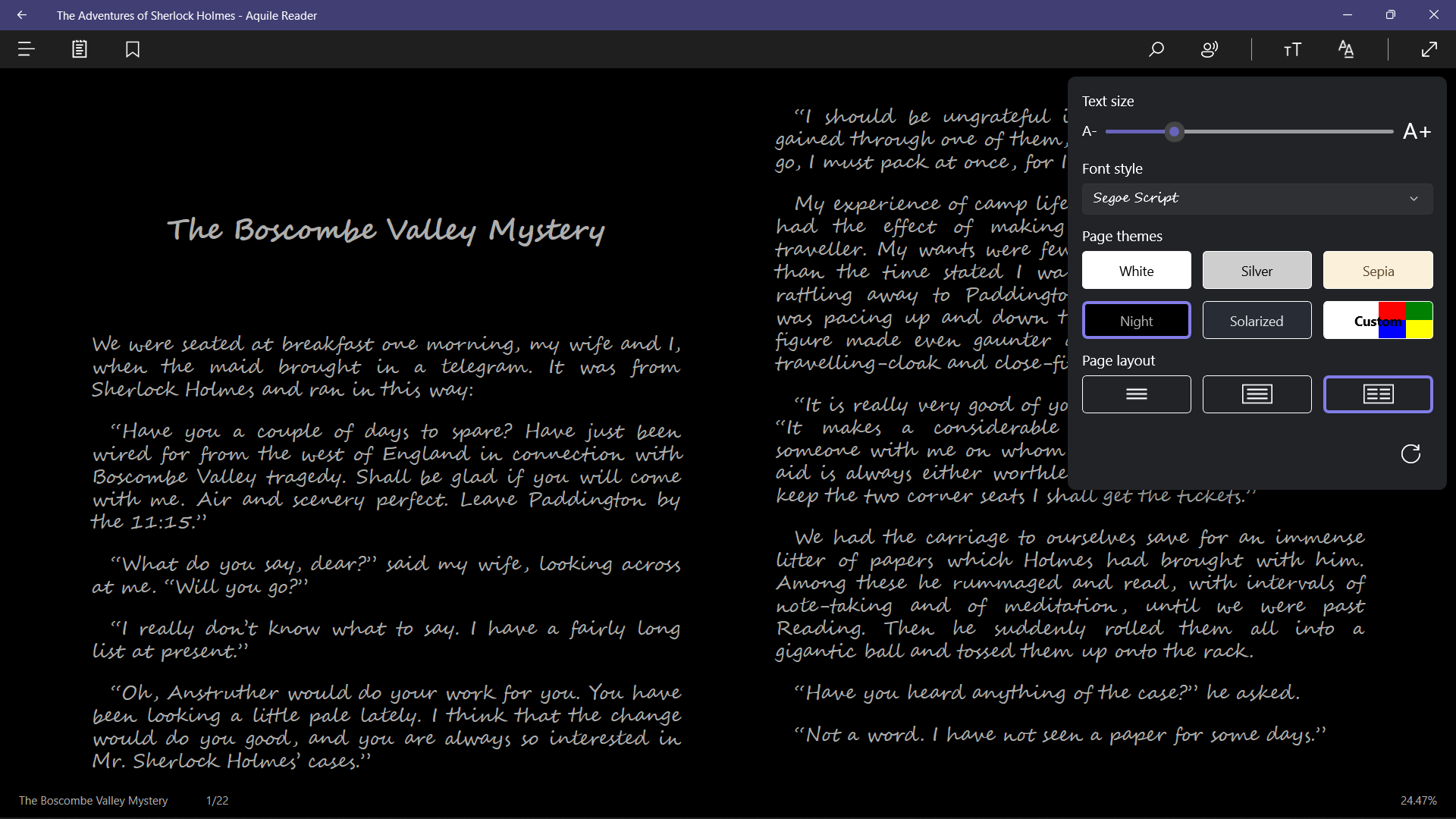
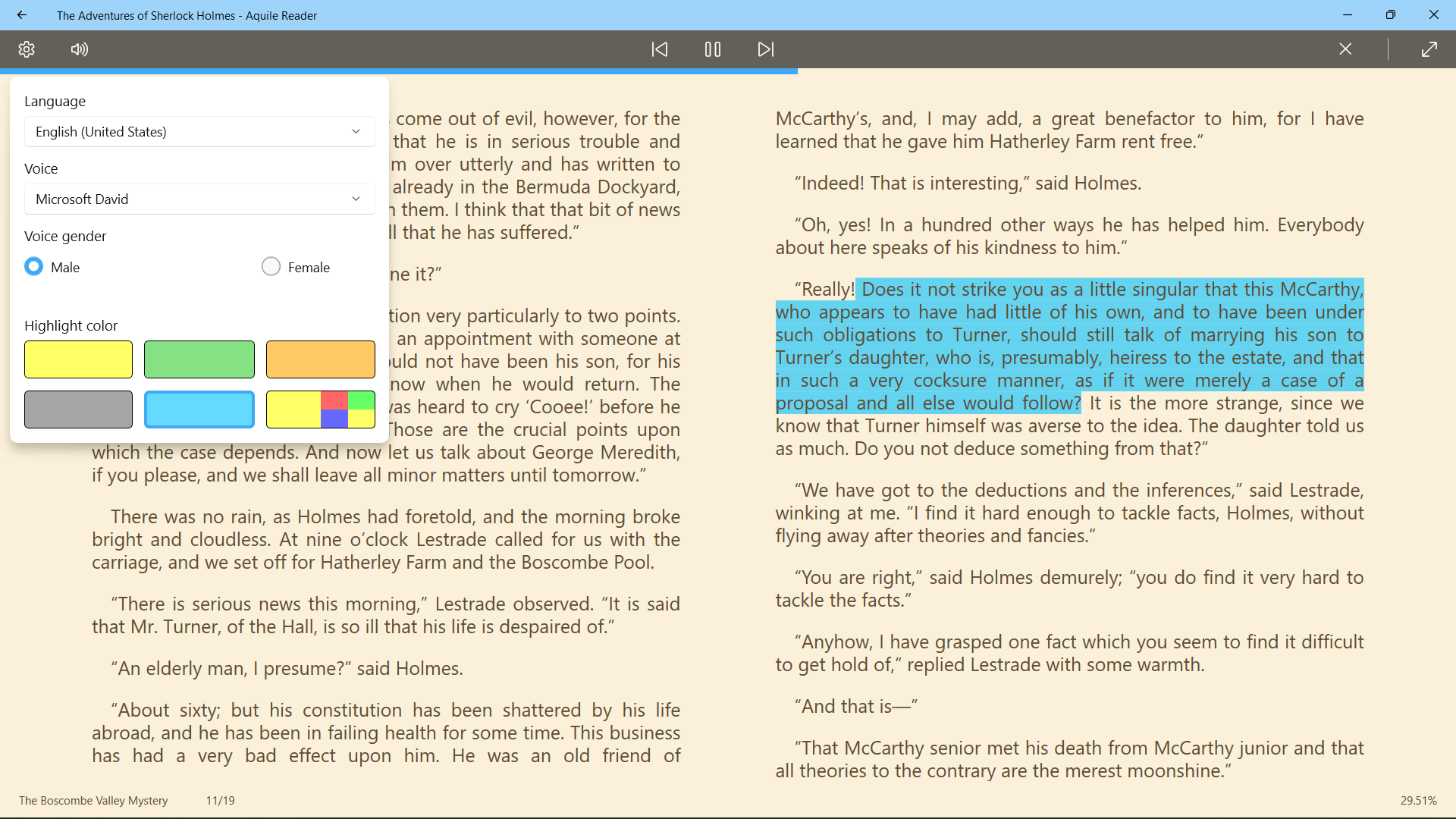
Aquile Reader is a powerful and highly customizable eBook reader app designed for both Android and Windows. Dive into an immersive reading experience with seamless cross-device sync, built-in Text-to-Speech (TTS), and a fully customizable user interface. Enjoy your own local eBook files (DRM-free) or explore a vast collection of over 50,000 free eBooks directly within the app's integrated online catalogs.
Sync your books and reading books across your phone, tablet and laptop over Windows and Android platform.
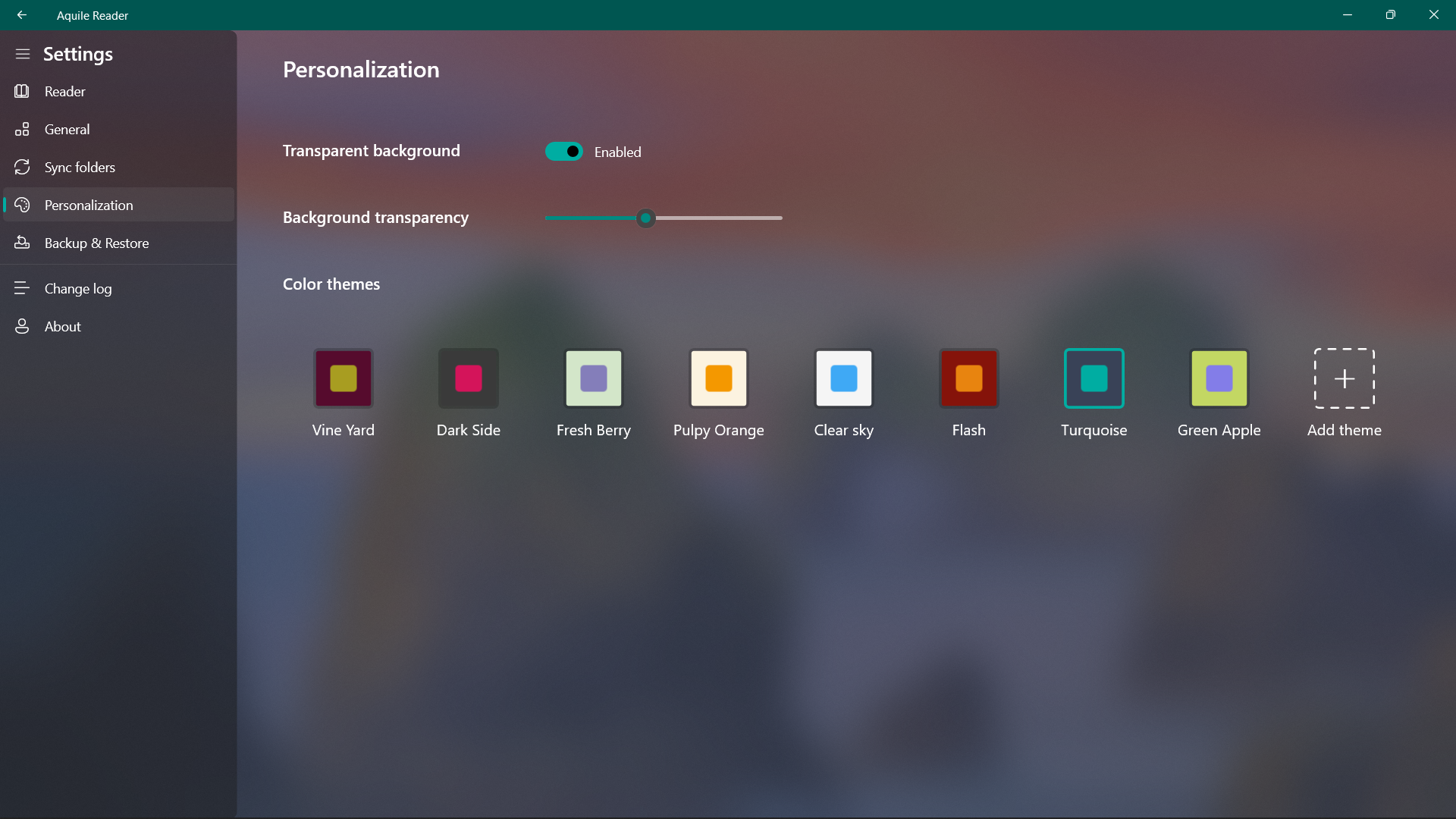
App features a modern and easy to use design.
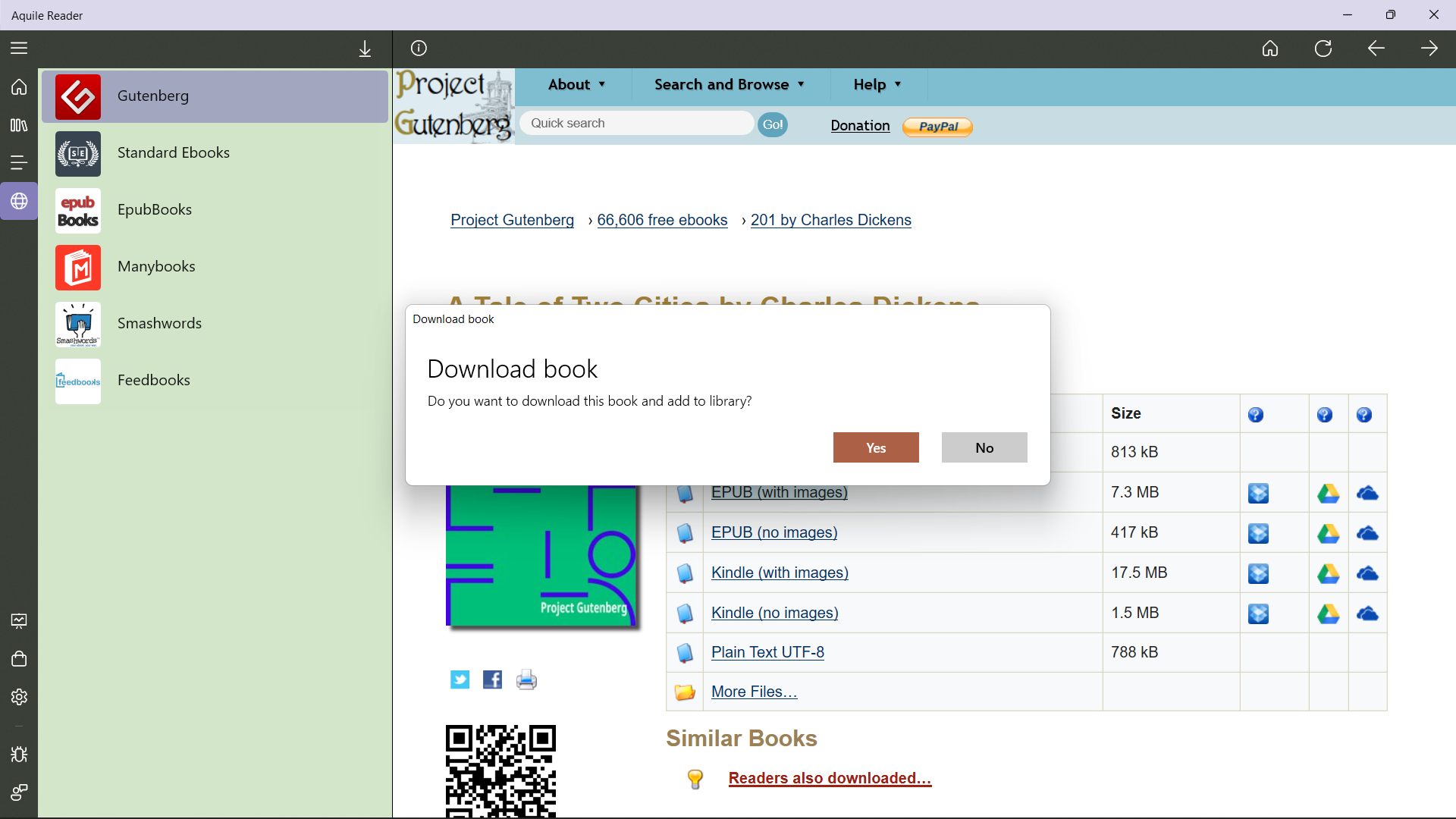
App features in-built store to download books from some of the most popular book libraries.
To achieve this, you must recursively run the find_pivots and label_elliott_waves function on a higher-resolution timeframe.
# Extract sub-section of data (e.g., hourly data if daily) sub_data = price_series[(price_series.index >= wave3_start) & (price_series.index <= wave3_end)] elliott wave python code
Before diving into the code, we must address the "Elephant in the room." Elliott Wave is notoriously subjective. A wave can be impulsive (five sub-waves) or corrective (three sub-waves). However, three core mathematical properties make it automatable: To achieve this, you must recursively run the
# Plot the pivot points for idx, price in pivots.items(): plt.scatter(idx, price, color='red', s=50, zorder=5) plt.text(idx, price, f'{price:.2f}', fontsize=8, verticalalignment='bottom') To achieve this